
The importance of user personas in UX research.
The definition of Personas or Archetypes is one of the most important parts of UX research because it allows you to design for someone real, not for assumptions. Even when they are “proto-personas” (that is, initial versions created before having complete data), they already give you direction and focus.
Why are user personas important in UX research?

1. First of all, because they align the team around a specific user.
Without personas, each team member imagines a different user.
With personas, everyone refers to the same user, the same needs, the same contexts, and the same priorities.
2. They also help prioritize features.
If you know who your main user is, you can make decisions based on clear criteria:
- Which feature is truly necessary
- What provides real value
- What can wait for a second phase (MVP → advanced)
Without personas, teams tend to want to include everything, leading to confusing products.
3. They humanize the research
LPersonas turn isolated data into faces, motivations, frustrations, and goals.
This helps the team empathize and understand why something is important for that user, and not just “what the analytics say.”
4. They serve as a guide throughout the entire design process
From the beginning to the final prototypes, personas are used to:
- Design flows and architecture
- Evaluate whether a solution fits the user
- Make decisions during design reviews
- Create content, tone, and microcopy
- Prioritize product tasks
They are a stable reference throughout the entire project.
5. They reduce risks and poor decisions
Designing without understanding the user leads to features no one uses, confusing interfaces, and low conversion or retention.
Personas help identify these risks before building anything.
6. They improve the final product experience
When you know exactly what your user wants, needs, and fears, you can design:
- Clearer interactions
- More relevant content
- More logical flows
- Interfaces that feel “designed for me”
The experience feels more coherent and personalized.
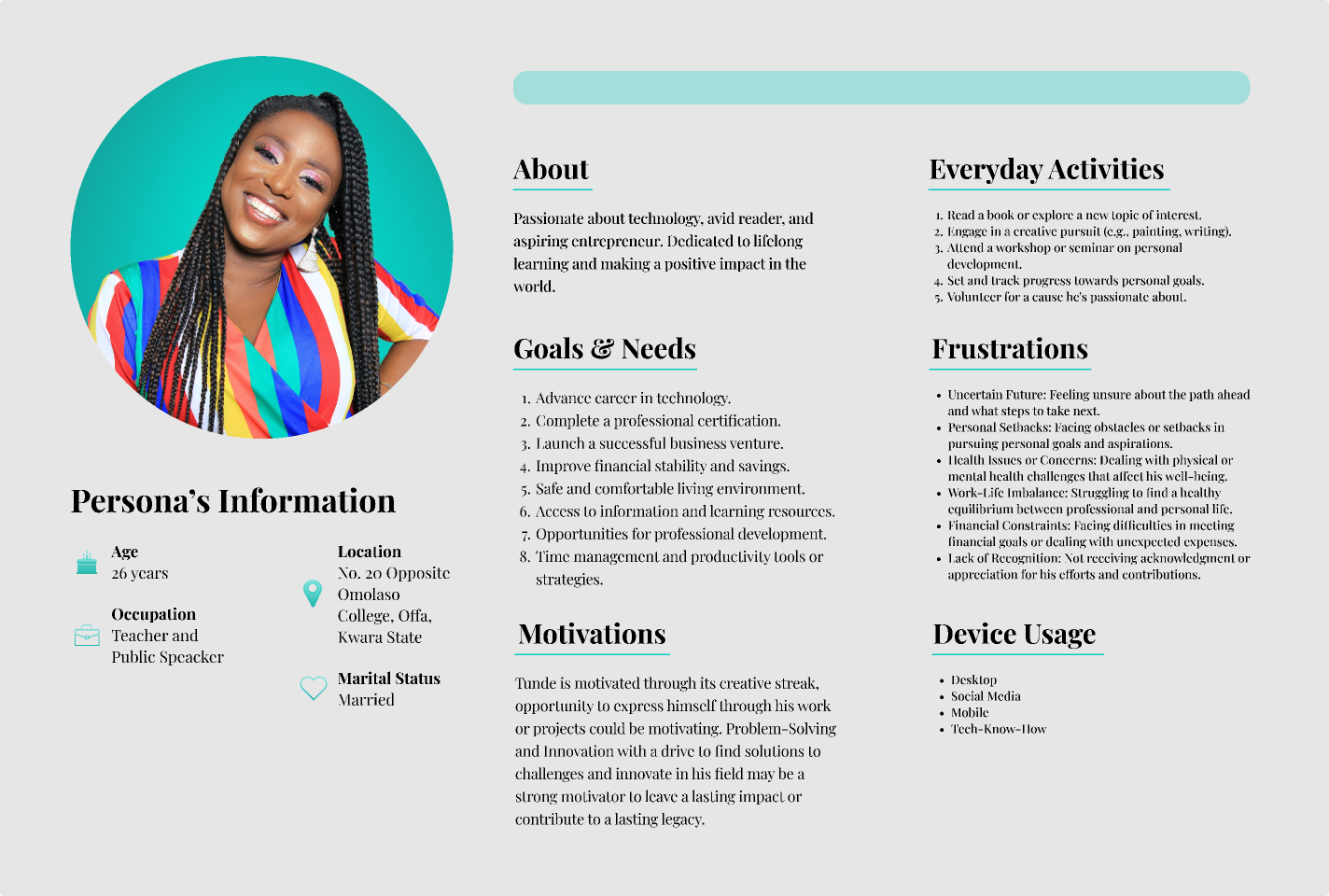
In conclusion, defining Personas is a critical pillar in any UX process because it transforms research into a strategic tool. It allows the project to stop relying on internal assumptions and instead focus on real needs, turning design decisions into well-grounded business decisions.
By aligning the entire team around a clearly defined user, you avoid scattered criteria, prioritize features that create impact, and reduce mistakes that would cost time and resources in later phases.
In essence, Personas are not just another deliverable: they are the framework that ensures the product is built for the person who will actually use it, enabling a coherent, efficient, and outcome-oriented experience. Without them, design moves blindly; with them, it moves with purpose.